
When we talk about child development, we often focus on movement, play, language or behavior.
But there is a skill just as important that many parents don’t hear about: executive functioning.
These are the skills that help a child plan, focus, follow steps, control impulses, manage emotions, and adapt when something changes.
They are the “behind the scenes” skills that support everything a child does.
Why Executive Functioning Matters
Strong executive functioning skills help children:
- Handle frustration
- Stay on task
- Try again after a mistake
- Plan and organize
- Communicate better
- Feel more confident in daily activities
How We Build Executive Functioning in Therapy
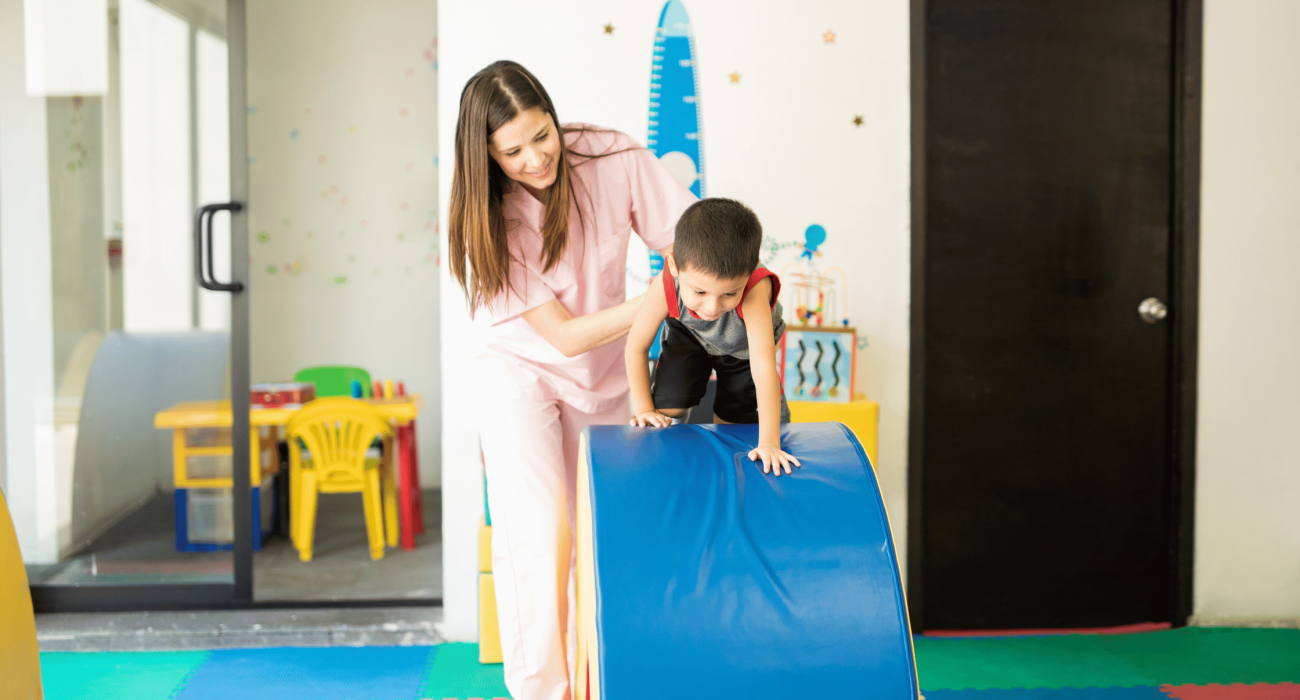
In psychomotor therapy, we work on these skills through movement-based, sensory-rich, and play-based activities. When a child moves, their brain learns to organize information better which strengthens their executive functions.
Here are some ways we build these skills:
- Using movement to support attention
Activities like obstacle courses, jumping, crawling, or balancing help a child stay regulated. A regulated body leads to a more focused mind.
- Working on impulse control through play
Games with turn-taking, waiting, or following simple rules support self-control in a fun way. Not by forcing the child to “sit still,” but by giving them a reason to stay engaged.
- Strengthening working memory
We use play ideas that ask the child to remember steps. For example: “First jump, then throw the ball”
These small tasks slowly build the child’s ability to hold information.
- Supporting emotional regulation
Through sensory activities like deep pressure, movement, tactile play, we help the child understand and manage big feelings. This makes transitions and new situations easier.
- Building flexible thinking
We introduce small changes in activities:
A new rule, a different path, a switched role.
This helps the child adapt without feeling overwhelmed.
How You Can Support These Skills at Home
You don’t need complicated activities. Simple moments help a lot:
- Give one step at a time, then slowly add more
- Use visual cues or photos
- Play turn-taking games
- Let your child help with small routines (setting the table, tidying toys)
- Keep transitions predictable
- Offer choices: “Do you want to start with blocks or puzzles?”
When daily life feels organized and simple, executive functioning grows naturally.
Conclusion
Executive functioning is not taught in one day. It grows slowly, through play, movement, and consistent support.
Every child can build these skills, we just need to meet them where they are, understand what their body and brain need, and guide them gently.
By Noura Zein
Psychomotor Therapist
AGAYA Healthcare Center