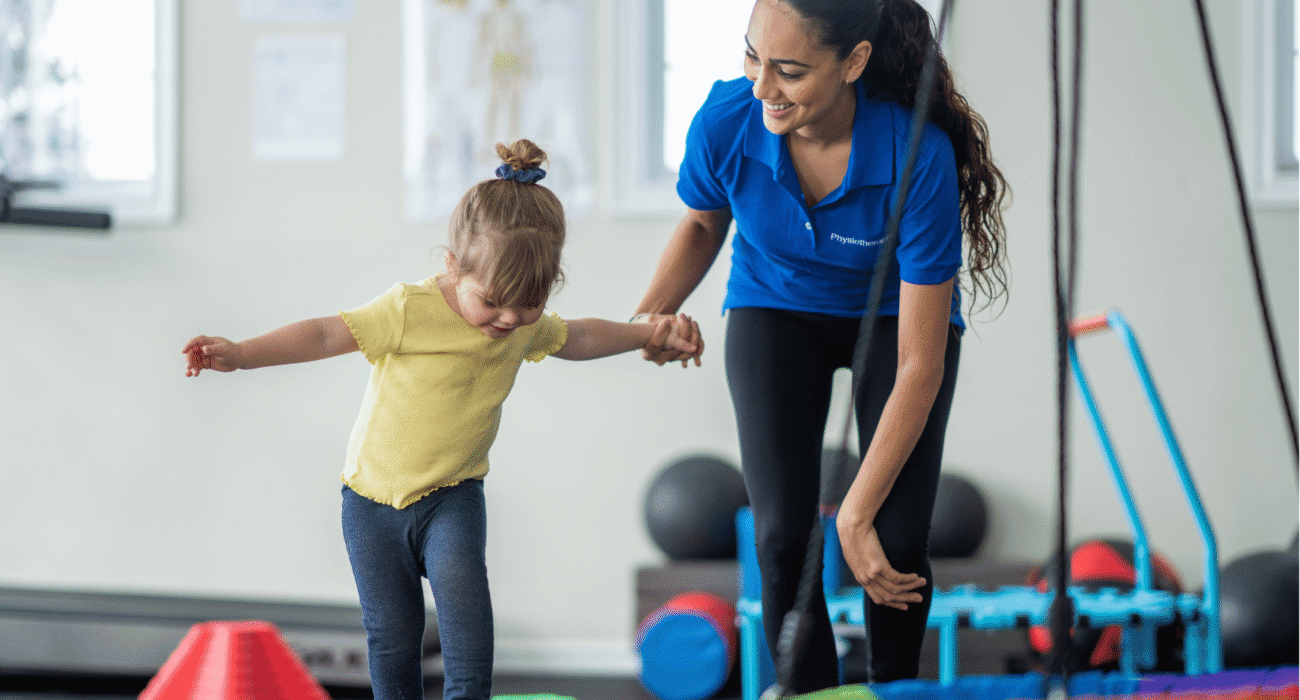
The first years of life are a uniquely sensitive window for brain development. During this period, the nervous system reorganizes itself in response to experience, a phenomenon known as neuroplasticity. Pediatric physiotherapy leverages this window through early intervention, using targeted movement, sensory stimulation, and family-guided activity to shape a child’s motor and cognitive growth.
Why Timing Matters
Neuroplasticity is most pronounced during infancy and early childhood, when neural connections are still forming, being pruned, and consolidated. Early intervention rests on the premise that strong neural pathways built early provide the architecture for later, more complex skills. This is why physiotherapy for at-risk infants, including those born preterm or with neuromotor delays, typically begins in the neonatal period and continues through the first two years, when the brain’s adaptive capacity is at its peak.
Evidence From Clinical Research
Randomized trials of early physiotherapy for preterm infants have combined parental education with tactile and kinesthetic stimulation during NICU stays, followed by home-based activity programs, showing gains in fine motor, problem-solving, and communication domains even when standardized motor scales showed no group difference. In infants with neuromotor disorders, interventions built around active problem-solving and play, rather than passive handling, have shown measurable improvements in both motor and cognitive outcomes, reinforcing that engaging a child’s own exploratory drive strengthens neuroplastic change.
For more complex conditions such as cerebral palsy, intensive and individualized rehabilitation combining manual therapy, physical therapy, and occupational therapy produces better functional outcomes than fragmented or delayed care, precisely because it exploits the developing brain’s heightened plasticity. Similar principles apply to protocols for children with neurometabolic and neurodevelopmental disorders, where gait training, orthotic support, and repetitive motor practice are paired with motor-learning strategies to help the brain rebuild functional pathways after injury or delay.
The Physiotherapist’s Role
Pediatric physiotherapists design activities that are repetitive, purposeful, and embedded in a child’s daily environment, not confined to a clinic session. Home programs extend the “dose” of stimulation needed to consolidate new pathways, and family involvement functions as a therapeutic tool in itself, since caregivers provide the consistent, high-frequency practice clinical sessions alone cannot supply. Progress is emotional as much as physical: as children master new movements, therapists see gains in confidence that support generalizing new skills to preschool, school, and community settings.
Conclusion
Early intervention is not simply “getting a head start”, it is strategic use of a finite biological window. Clinical evidence across preterm, at-risk, and neurologically impaired populations sends a consistent message: the earlier the developing brain is engaged with the right movement and sensory experience, the more durable and far-reaching the developmental gains.
Written By Ahmed Sliem
Pediatric Physiotherapist
References
- Ochandorena-Acha, M., et al. “Early Physiotherapy Intervention Program for Preterm Infants and Parents: A Randomized, Single-Blind Clinical Trial.” PMC.
- “START-Play Physical Therapy Intervention Impacts Motor and Cognitive Outcomes in Infants With Neuromotor Disorders: A Multisite Randomized Clinical Trial.” Physical Therapy, Oxford Academic.
- “Effectiveness of Family Collaborative Physiotherapy Programs With High-risk Infants.” ClinicalTrials.gov, NCT04035291.
- “Neuroplasticity in Rehabilitation of Children with Cerebral Palsy.” ResearchGate.
- “Effects of a Tailored Pediatric Rehabilitation Protocol on Children With Neurometabolic Disorder: A Case Report.” PMC.
- “Neuroplasticity in Early Childhood Therapy.” Therapies for Kids Blog.