Speech Clarity in Children: Signs Your Child Might Need Support
One of the most common concerns I hear from parents sounds like this: “My child talks a lot, but only I can understand them. Is that normal?”
Being your child’s constant translator, especially when relatives, teachers, or peers look confused, can be exhausting. While it is completely normal for young children to mispronounce words as they learn to talk, persistent speech clarity difficulties can affect a child’s confidence, social interactions, and learning. Here is what to look for and what actually helps.
Why Speech Can Be Unclear
Producing clear speech is a finely tuned motor skill. To say even a simple word like “sun,” the brain must plan the movement while the tongue, lips, teeth, and vocal cords coordinate with precision. When any part of that process breaks down, speech becomes difficult to understand.
Speech clarity issues generally fall into these categories:
- Articulation difficulties: trouble physically producing a specific sound, such as lisping on “s” or replacing “r” with “w”
- Phonological disorders: the child can make the sounds but the brain simplifies patterns, for example saying “ca” instead of “cat”
- Oral motor weakness: reduced strength or coordination in the tongue, lips, or jaw
- Hearing impairment: if a child cannot hear certain sounds clearly, they cannot accurately reproduce them
Clarity Milestones and Red Flags
A useful guide for how much of a child’s speech should be understood by an unfamiliar listener:
- By age 2: approximately 50% clear
- By age 3: approximately 75% clear
- By age 4: 90 to 100% clear to anyone, including strangers
Signs your child may need support:
- Frequently swapping sounds, for example “tat” for “cat” or “pan” for “fan”
- Dropping beginning or ending consonants regularly, such as “bu” for “bus”
- Speech that sounds slurred, mushy, or effortful
- Giving up on trying to talk or becoming upset when misunderstood
- Struggling with sounds like p, b, m, h, w, d, n, t, k, g, and f by age 3 to 4
What Does Not Help
Well intentioned responses can sometimes make things harder:
- Repeating the correct word over and over without showing how. Demanding “say computer, not pooter” without demonstrating the mouth movement creates frustration, not progress.
- Pretending to understand when you do not. Nodding along denies your child the natural feedback they need to refine how they communicate.
- Imitating or repeating cute mispronunciations. This reinforces the incorrect sound pattern rather than helping correct it.
What Actually Helps at Home
- Model, do not correct. Repeat what they said with the correct pronunciation, placing gentle emphasis on the target sound. If they say “look at the tat,” respond with “oh wow, look at that cat. The cat is sleeping.”
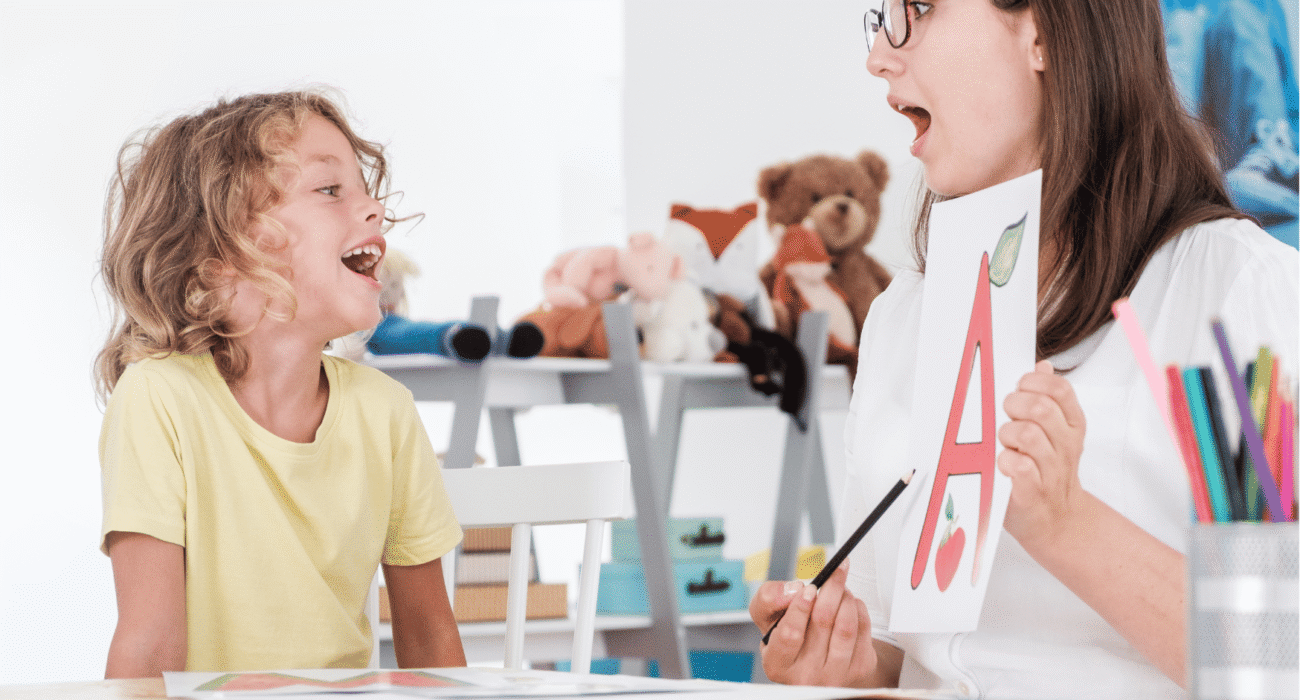
- Get face to face. Crouch to eye level so your child can see how your lips and tongue move when you speak.
- Acknowledge the message first. Validate what they are telling you before addressing clarity so they feel heard and confident to keep trying.
How Speech and Language Therapy Helps
Our speech therapy for sound clarity is structured, evidence based and designed to be engaging for children. We do not rely on drilling flashcards. We make sound production enjoyable.
When you bring your child for an assessment, we identify exactly which sounds are unclear and whether the issue is articulatory, phonological, or motor based. From there, we use visual and tactile cues, such as mirrors and mouth movement guides, to teach children where their tongue and lips need to go. We build clarity systematically, from isolated sounds through to natural conversation, and we equip parents with simple five-minute daily activities to reinforce progress at home.
Tip of the Day
Be a mirror, not a judge. When your child mispronounces a word, repeat it back correctly with warm enthusiasm on the tricky sound, making sure they can see your face as you do. Watching your mouth helps their brain build the right map for that sound, without any pressure or correction.
Lara Mendonsa
Speech and Language Therapist