
Delayed Speech and Language Skills: Signs Your Child Might Need Support
One of the most common things I hear from parents in my clinic is simple and filled with worry: “My two year old is not speaking like other kids their age. Should I be concerned?”
If you have found yourself comparing your child to their peers, you are not alone. Wondering whether your child is a late bloomer or needs a little extra support is one of the most natural anxieties of parenthood. Here is what you need to know.
Why Speech Delays Happen
Communication is complex. It requires the brain, hearing, mouth muscles, and social understanding to work together. A speech or language delay in children can happen for several reasons:
- Hearing impairment, including minor undetected fluid build-up after ear infections
- Developmental variations, where some children simply take longer to process and organise language
- Oral motor difficulties with coordinating the lips, tongue, and jaw to produce clear sounds
- Neurodevelopmental differences such as Autism Spectrum Disorder or Global Developmental Delay
- Limited back and forth verbal interaction or excessive screen time
Signs Your Child May Need Support
Every child develops at their own pace, but there are key milestones to watch for.
By 12 to 18 months:
- Does not point, wave, or use gestures to communicate
- Does not respond to their name or simple spoken cues
- Has limited babbling
By 2 years:
- Speaks fewer than 50 clear words
- Does not combine two words naturally, for example “more milk” or “bye daddy”
- Has trouble understanding simple requests like “get your shoes”
By 3 years:
- Family members struggle to understand most of what the child says
- Rarely initiates communication or makes eye contact when asking for help
- Becomes easily frustrated when trying to communicate
What Does Not Help
Well meaning advice can sometimes slow progress rather than support it:
- Waiting it out. Missing the early window of brain development when intervention is most effective is a real risk, even for late talkers who may catch up on their own.
- Anticipating every need before they speak. If a child points to juice and immediately gets it without any expectation to communicate, they lose the motivation to try.
- Screens as a learning tool. Language is social. Passive screen time does not replace the back and forth of human interaction.
- Drilling words or demanding “Say this.” Pressure causes children to shut down rather than engage.
What Actually Helps at Home
- Narrate as you go. Describe what you are doing in simple sentences: “Mummy is cutting the apple.”
- Follow their lead. Join whatever activity interests them and talk about it together.
- Give processing time. Count to five after asking a question. Children often need extra time before responding.
- Model, do not correct. If they say “doggy run,” expand naturally: “Yes, the big dog is running fast.”
How Speech and Language Therapy Helps
Our goal is not to force children to speak. It is to make communication feel safe, meaningful, and enjoyable.
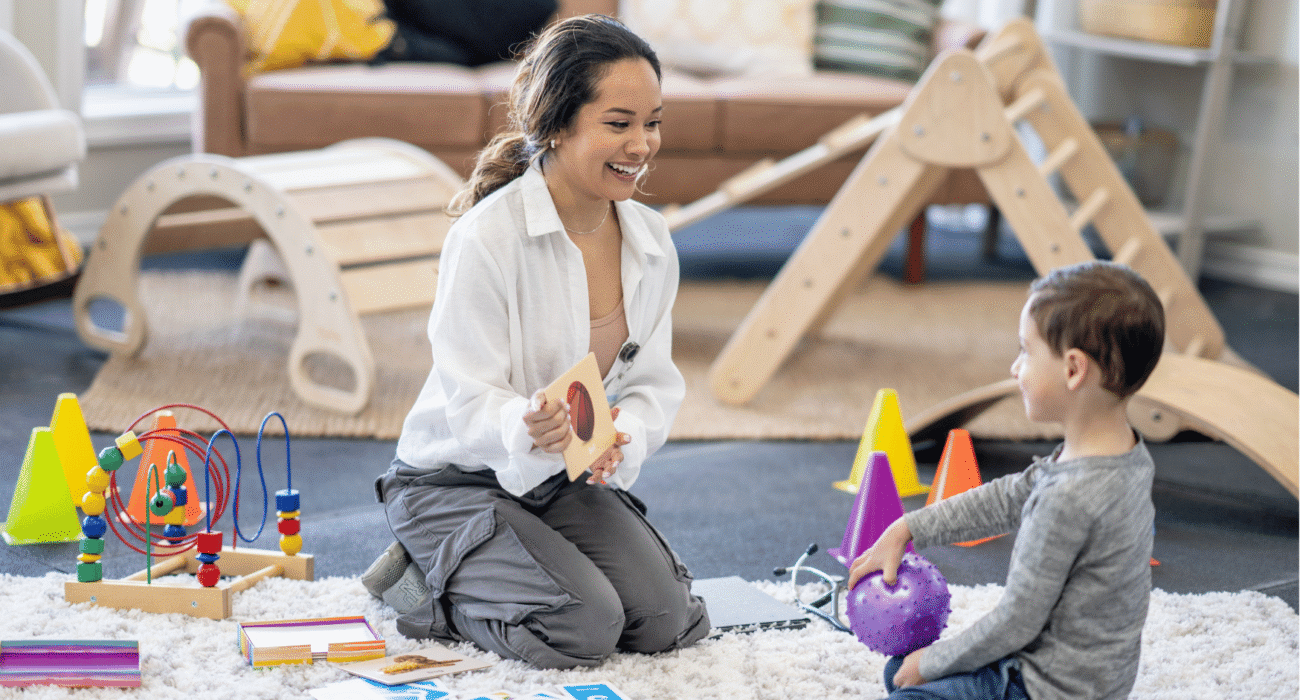
When you bring your child for an assessment, we will identify whether the delay is receptive, expressive, or oral motor. From there, we will design play-based interventions using games, songs, and interactive activities that build vocabulary and social communication without pressure. We also work closely with parents, because you are your child’s most important communication partner.
Tip of the Day
During bath time or getting dressed, pause just before a familiar step and wait with a smile. Giving your child five extra seconds creates a natural moment that encourages them to point, make a sound, or use a word to ask for what comes next. Small moments like these build big communication skills over time.
Lara Mendonsa
Speech and Language Therapist